The Melancholic Phlegmatic Blend: The Quiet Deep End
Depth without noise. What the melancholic phlegmatic blend does better than anyone, why its calm is sometimes a hiding place, and how the order of the two natures changes the person.
This is the person who says almost nothing in the meeting, then sends the one message afterwards that reframes the whole problem. They are not shy exactly. They have simply never seen the point of saying a thing before it is finished.
Most people lead with one temperament and carry a second underneath, and the second decides how the first behaves. If you have not seen your own pair yet, the test gives a full breakdown, and reading your top two explains what to do with it.
What the blend actually is
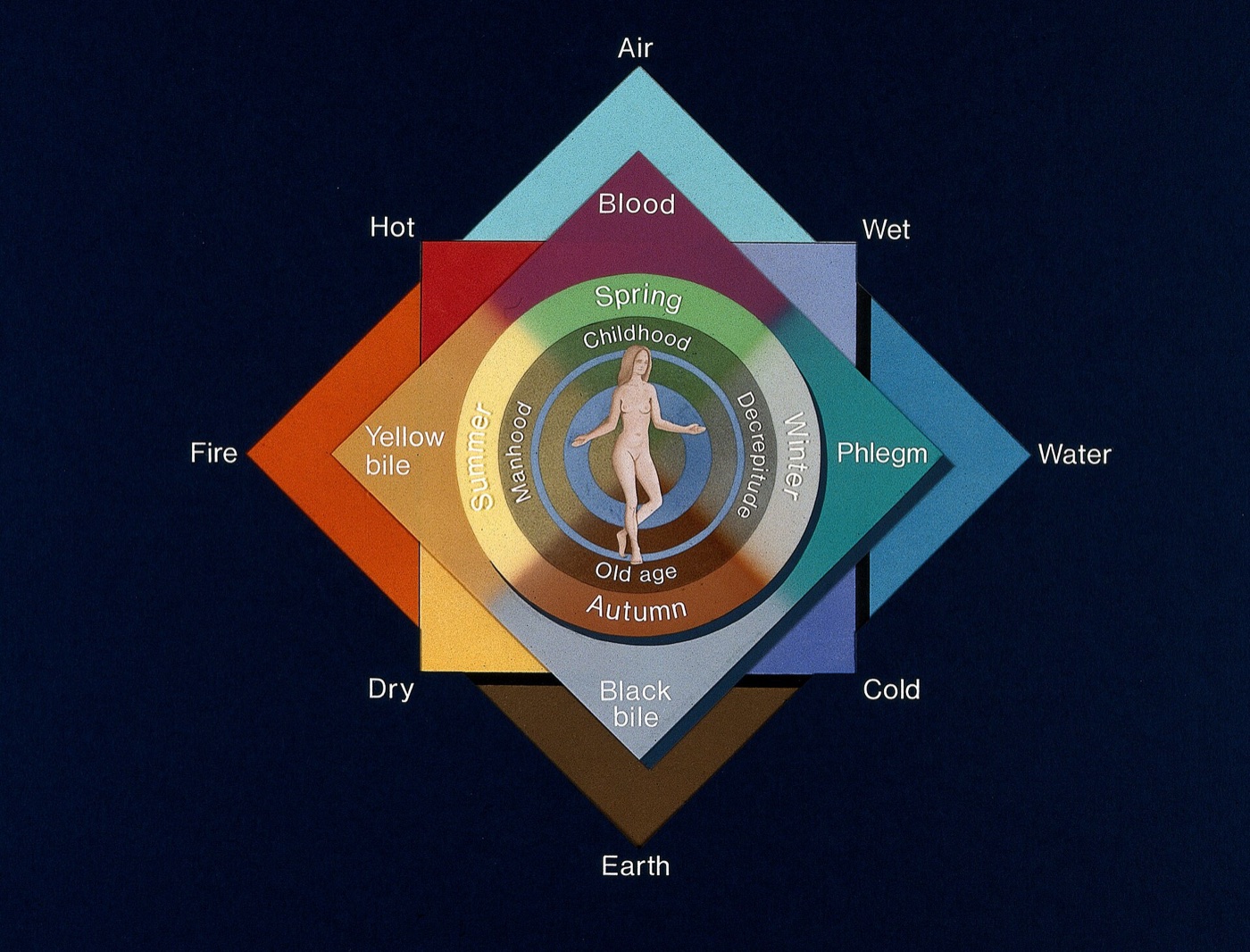
On the classical axes the melancholic is cold and dry, the phlegmatic cold and moist. This blend shares an axis, and the shared axis is cold.
Cold in this tradition never meant unfeeling. It meant slow: the constitution that settles rather than flares. So both halves of this person move deliberately. The melancholic supplies depth, standards and memory. The phlegmatic supplies patience, tolerance and an unusually high threshold for other people. What the blend does not supply is momentum.
How it looks from the outside
The common misreading is that nothing much is happening. A great deal is happening; none of it is on display.
- They are quiet in groups and precise one to one.
- They notice everything and mention perhaps a tenth of it.
- They do not compete for the floor, so they are often the last to be asked and the first to be right.
- They are loyal in a way that does not announce itself and does not expire.
- They agree in the room and revise in private, which other people mistake for consent.
The strengths
Nobody carries a long, difficult, unglamorous task better than this blend. The melancholic half insists it be done properly; the phlegmatic half is not offended by how long that takes. They keep confidences absolutely. They are the friend who remembers the anniversary of the bad thing and says nothing, just arrives.
In teams they are the quality floor. Standards without shouting, and a tolerance for difficult colleagues that the warm types burn through in a week. How each temperament learns describes the studying half of this well: they go deep, slowly, and it stays.
The failure mode
This blend fails quietly, which is what makes it dangerous. The characteristic failure is withdrawal that looks like peace.
Something goes wrong. The melancholic half takes it to heart and begins to construct the case; the phlegmatic half declines the confrontation. Neither half is built to raise the matter out loud, so it is filed. Then it is filed again. Months later the person is not angry, exactly. They are simply further away than they used to be, and the other party never learned there was anything to fix.
The second failure is the standard that never ships. The melancholic half wants it right, the phlegmatic half is content to wait, and between them a good piece of work can sit unfinished for years. Nothing in this blend generates urgency, so urgency has to be borrowed: a deadline, a promise made out loud, a person waiting.
Under pressure the tells are inward. Sleep goes, the inner critic gets louder, the social calendar quietly empties. What each temperament does under stress sets out the pattern.
Melancholic phlegmatic or phlegmatic melancholic?
Same two natures, different order, noticeably different person.
The melancholic phlegmatic broods first and settles second. Standards lead. They care intensely, take things personally, and then the phlegmatic half absorbs the shock and steadies the surface. Inside, the case is still being written.
The phlegmatic melancholic settles first and broods second. Peace leads. Their first instinct is that it is not worth the fuss, and the melancholic depth surfaces later, usually in private and usually about something that mattered more than they let on.
A quick test: when someone disappoints you, is your first move to analyse it or to let it go? Analyse first means melancholic leads. Let go first, then find yourself thinking about it at midnight, means phlegmatic leads.
At work
This blend fits research, editing, accounting, archives, care work, quality control, translation, maintenance of anything complicated: work where being right matters more than being fast, and where nobody needs you to perform.
It struggles with self-promotion, hard negotiation and anything requiring a decision on incomplete information. Two practical consequences follow. First, this person will be underestimated in any organisation that mistakes volume for contribution, so their manager has to go and ask. Second, they need external deadlines, because internal ones are negotiable with themselves. The four temperaments at work covers the other types for comparison.
In relationships
Steady, deep, undramatic, and easy to live beside. This blend is not the one who leaves. The difficulty is not conflict but silence: they will absorb a great deal rather than start a hard conversation, and absorbing is not the same as forgiving.
With a warm partner the fit is often excellent, provided the warm one understands that quiet is not rejection. A sanguine draws them out; a choleric supplies the missing momentum, at the cost of occasionally running them over. See sanguine vs melancholic and choleric vs phlegmatic, and the compatibility chart for all ten pairings.
With another cold nature the peace is genuine and the risk is drift: two people who both wait to be asked can go a long time without saying anything that matters.
How to grow
- Say the thing within a week. Not perfectly, not fully formed. Within a week.
- Borrow urgency on purpose: tell one person the date, out loud.
- Ship it at ninety per cent. The last ten per cent usually costs more than it returns.
- Distinguish rest from retreat. One restores you, the other slowly shrinks the world. How each temperament rests is the practical version of this.
- Let people know they matter while they are still there. The blend assumes loyalty is obvious. It is not.
What the tradition says about blends
The idea that qualities combine is old. Galen counted nine constitutions rather than four: one balanced, four simple and four compound, with the compound ones formed exactly as this blend is, by pairing a temperature with a moisture.
Kant disagreed. Writing in 1798 he held that the four temperaments are simple and cannot be mixed, which is why his account has four and stops there. The named blends that circulate today, melancholic phlegmatic among them, come from the twentieth century popular revival of the typology rather than from the ancient sources.
So treat the blend as a good description of tendencies, not a law and not a diagnosis. If it is yours, the short version is this: your patience is a gift and your silence is a habit. Keep the first, spend the second more freely.
Frequently asked questions
What is a melancholic phlegmatic personality?
What is the difference between melancholic phlegmatic and phlegmatic melancholic?
What is the main weakness of the melancholic phlegmatic blend?
What work suits a melancholic phlegmatic?
Which temperaments pair best with a melancholic phlegmatic?
Sources
- Hippocratic corpus, On the Nature of Man, ch. 4, on the four humours and the qualities that pair with them.
- Galen, De temperamentis (On Mixtures), on the nine constitutions, including the compound ones formed by pairing a temperature with a moisture.
- Immanuel Kant, Anthropology from a Pragmatic Point of View (1798), Book II, 'On temperament', where the four are held to be simple and unmixed.
- Tim LaHaye, Spirit-Controlled Temperament (1966), representative of the modern popular literature in which named blends became standard.
Find your temperament
Take the test